An 1880s photograph of the Chowmahalla Palace, Hyderabad
Since the Nizam’s era

A sweet with a lineage

Badam ki Jali — the “net of almonds” — is a baked almond sweet that, by the best-documented account, travelled into Hyderabad through marriage, in the recipes Nawaiti brides carried from Madras and Arcot, and became famous in the small Old City colony of Aziz Bagh — the family home our recipe comes from.

Banner: Chowmahalla Palace, Hyderabad, 1880s — Lala Deen Dayal, public domain via Wikimedia Commons
What’s in a name

A net of almonds

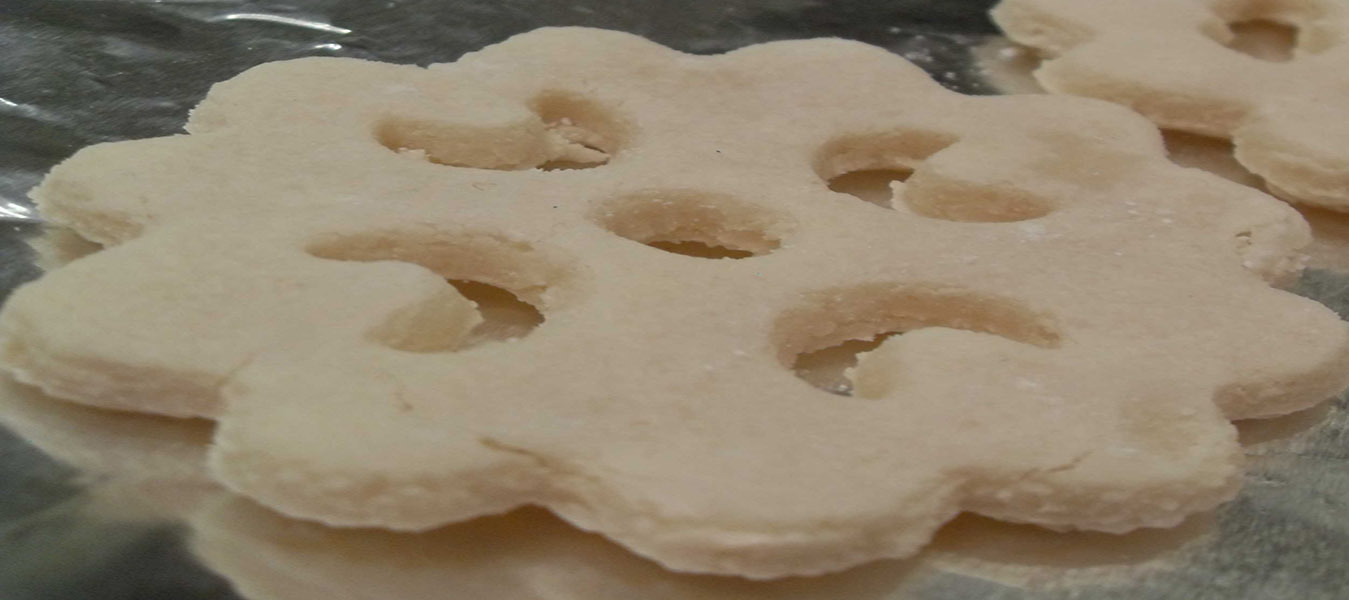
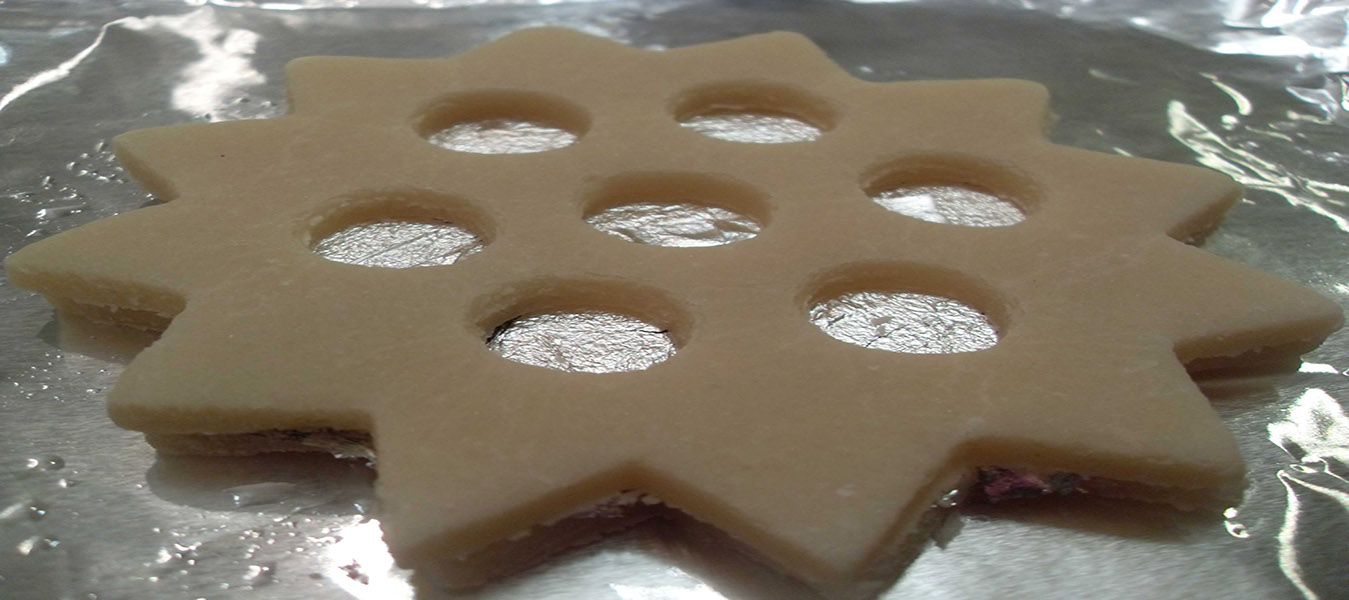
Jali is the word for a lattice with holes, each hole carrying an ornamental design — the same word used for the pierced stone screens of the Deccan’s tombs and mosques; the equivalent Urdu word is naqsh. Badam is almond. Badam ki Jali, then, is a net of almonds: a dough of ground almonds and sugar, rolled thin, cut into lattice shapes that leave a perforated, lace-like pattern in the dough itself, and baked. The lattice is not piped or painted on afterwards; it is the shape the mould gives the sweet.

The original jali was made with milk, egg white, ground almonds, sugar and rose water. After mixing and kneading well, the paste was cut into lattice-like shapes and baked in a pan on hot coals — which gave the skin a hardness that made it very delicate (khasta), breaking at the slightest impact. It was considered one of the most delicious of sweets. Over time the ingredients have changed and people make it in different ways; not all jalis are Nawait, and the dessert has been copied and modified by many. A simple jali is one layer; a warqi jali is two layers with a silver lining between.

How the handwork goes is told on the Craft page. This page is about where the sweet came from, and where it lives — from Madras to Aziz Bagh in Hyderabad, and from Aziz Bagh to Michigan.

A large single-layer jali — the pierced lattice pattern in the almond dough
Large non-warqi jali — from our kitchen
Name
Badam ki Jali (also written badam ki jaali) — badam, almond; jali, net or lattice.
Meaning
“Net of almonds” — after the netted, lace-like designs the moulds leave in the sweet.
Made of
Ground almonds and sugar; egg white, milk and rose water in the original recipe; a leaf of silver varq between the layers of a warqi jali. No ghee or oil.
Texture
Crisp and delicate — khasta — like a cookie; the taste is close to kaju katli.
Origin
Two accounts, both told below: carried from Madras and Arcot by Nawayat brides, or born in the kitchens of Hyderabad’s nawabs.
Best known for
Weddings — the pre-wedding Sanchak ceremony, the bride’s trousseau, dessert after the feast — and for the families of Aziz Bagh in the Old City, one of whom now makes it in Michigan.
Two stories of origin

Where the jali came from

Ask where Badam ki Jali began and you will hear two answers. This site presents both, as the sources tell them, and does not choose between them.

The Nawayat route, from Madras and Arcot

The best-documented account traces the sweet to the Nawayat (also written Navaitha) — an Urdu-speaking Muslim community of old Madras and the Arcot country. A 2017 New Indian Express “Taste Trails” column, reproduced by Foodaholix, wrote that “through inter-marriages, the recipe has been adopted in Hyderabad about a century ago and especially found popularity at wedding dinners”.

The Hussaini family of Aziz Bagh, who have made it since 1964, say the same more bluntly: the Nizams did not bring it to the city — a mother-in-law did, from Madras (The News Minute, 2019). The Better India (2022) describes recipes like this one travelling to Hyderabad through inter-community marriages, in the closely guarded wedding trousseau of the bride.

The Nawabi kitchens

A popular telling — repeated in The Siasat Daily in 2025 — begins the story in the 1800s, in the homes of Hyderabadi nawabs and noble families, and sees in it the influence of Persian and Turkish marzipan brought through dynastic marriages. Outlook Traveller wrote in 2014 that “nawabi brides were gifted painstakingly made badam-ki-jaali in their trousseaus”. Newer makers say it once “adorned festive platters in royal homes”; an old confectioner in Nampally simply dates it to the Nizam era.

The two tellings are not entirely at odds. The very family who insist the Nizams did not bring it still call it a Nawabi mithai — a sweet of the nobility that they made accessible to everyone.

“It is a Nawabi mithai that we made accessible to everyone.”— Nafees Hussaini, The Better India, 2022

Where every account agrees: the sweet belonged to weddings — to the bride’s trousseau, to the pre-wedding Sanchak ceremony, to the dessert course after the feast — and to a handful of families who guarded the recipe closely.

Aziz Bagh, 1899

The house behind the name

Aziz Bagh is a mansion, and the small colony that grew around it, in Noorkhan Bazar–Sultanpura in the Old City — a short way from the Salar Jung Museum and the Charminar. The house was built in 1899 by Nawab Aziz Jung Bahadur (1860–1924), a scholar and poet of Persian and Urdu who wrote under the pen-name Wila, and who paid for it with the income from the sale of his books. He wrote some twenty-one of them, among them the dictionary Asif-ul-Lughat and, in 1904, Tareekh-un-Nawayat, a history of the Nawayat community; he also published a newspaper, Aziz-ul-Akhbaar, from the house.

He developed the Noorkhan Bazar–Sultanpura neighbourhood around it, and the road in front is officially Aziz Jung Road. The family’s own description of the place is the best one: “a miniature colony, fringed on all sides by a tribe of near kith and kin”. The mansion — a south-facing portico on Ionic columns, Gothic Revival touches, polished marble floors, Deccani-Islamic heirlooms, some three acres of grounds — survived the flood of 1908, was featured in Indian Style (1990), received the INTACH Cultural Heritage Award on 27 July 1997 and was listed as a heritage structure in 2013. Seven generations of the family have lived in it.

The mansion’s own family — the descendants of Aziz Jung — are scholars and civil servants, not confectioners; the sweet has been made by the related families of the colony around the house. Aziz Jung did, as it happens, write the history of the Nawayat, the community whose desserts these are.

Archive photograph taken at Aziz Bagh, Hyderabad, in 1940
A 1940 photograph captioned ‘Aziz Bagh, Hyderabad, Deccan’ · Public domain via Wikimedia Commons
The Charminar, Hyderabad
The Charminar, a short way from Aziz Bagh · Photo: DidierTais, CC BY-SA 3.0 via Wikimedia Commons
The Paigah Tombs, Hyderabad, with their stucco lattice work
The Paigah Tombs and their lattice work · Photo: Didier Tais, free licence via Wikimedia Commons
Carved stone jali lattice screen at the Paigah Tombs, Hyderabad
A stone jali screen at the Paigah Tombs — the lattice the sweet is named for · Photo: Adbh266, CC BY-SA 4.0 via Wikimedia Commons
From Aziz Bagh to Michigan

Kishwar’s Jali

Ask for “Aziz Bagh badam ki jali” in Hyderabad and you will be sent to a couple of related family kitchens in the colony, where the sweet has been made to order for decades. Ours is the kitchen that carried the recipe to the United States.

A large two-layered warqi jali with silver leaf showing through the latticeMade in the USA

Kishwar’s Jali From Aziz Bagh · West Bloomfield, Michigan

We are a Nawaiti dessert seller specialising in Badam ki Jali (almond cookie), Badam ki Ashrafi (almond coin) and fruit shapes made out of almond dessert material. We also make specialty desserts such as peosi made from eggs — anday ki peosi — badam ke lauz and hab ke lauz, and we cater for weddings and other occasions with these items in the form of trays and decorations.

Everything is made from the family’s original recipes and stamped designs, right here in the USA, fresh after your order is received: large 4.5-inch and medium 2.7-inch jali in single-layer and double-layer warqi form, 1.25-inch Ashrafi coins, folded paan leaves, almond strawberries, peosi and lauz — with organic, eggless and gluten-free options.

Michigan, USAFresh to orderShips free in the USA
See everything we make

The colony’s kitchens in Hyderabad

“There are only a couple of families here that make these sweets and they too are related,” one Hyderabad food writer noted. The best-known, the Imperial Sweet House, began taking home orders in Aziz Bagh, Sultanpura in 1964 from a recipe an elder had brought from Madras, and has been profiled by The News Minute, The Better India, Telangana Today and others; a second family in the colony sells under the name Badam Ki Jali Aziz Bagh. A handful of shops elsewhere in the city also make or sell it — and even so, a 2019 count found “hardly 3-4 shops in the city”.

Nawaiti desserts

When the Nawait people migrated to central India from Madras and the southern coasts, they brought their desserts with them: badam ki jali, badam ki ashrafi, amrood phal, anday ki peosi, badam ki puri, badam ka halwa, badam ke phal, boat ka halwa, panjeri, pooran puri, hab ke lauz, halwa sohan, dahi bade, dam ke rotth, gajar ka halwa, gil-e-firdous, badam ke lauz, maleeda, nan-khatai and warqi samosa.

“It is a Nawabi mithai that we made accessible to everyone.”— a maker of the Aziz Bagh colony, The Better India, 2022
Timeline

A short chronology

  • 1860

    Aziz Jung is born

    Ahmed Abdul Aziz, later Nawab Aziz Jung Bahadur — scholar and poet of Persian and Urdu (1860–1924, per the MIT Dome archive).

  • 1899

    Aziz Bagh is built

    In Noorkhan Bazar–Sultanpura, paid for with the income from his books; a colony of kith and kin grows around it (Wikipedia; azizbagh.com).

  • 1904

    Tareekh-un-Nawayat is published

    Aziz Jung’s history of the Nawayat — the Urdu-speaking community of old Madras and Arcot with which the sweet is most often associated.

  • Early 1900s

    The recipe reaches Hyderabad

    “About a century ago”, in the words of a 2017 New Indian Express column, the recipe was adopted in Hyderabad through inter-marriages and found its place at wedding dinners. The date is approximate — call it the early twentieth century.

  • 1964

    The Hussaini home business begins

    Nafees and S. M. Hussaini start taking orders in Aziz Bagh, Sultanpura — a kilo or two at a time, delivered by bicycle — when, by the family’s account, cashews cost Rs 8 a kilo and almonds Rs 10.

  • 1997

    INTACH Cultural Heritage Award

    Aziz Bagh receives the INTACH award on 27 July 1997.

  • 2013

    Listed heritage structure

    The mansion is formally listed as a heritage structure.

  • 2017

    The recipe crosses to the United States

    Kishwar’s Jali From Aziz Bagh opens in West Bloomfield, Michigan — badamkijali.com — making Nawaiti almond cookies, Ashrafi and desserts fresh to order, “right here in the USA”.

  • 2019–2025

    Rediscovery in the press

    The News Minute (2019) tells the story of four generations of Hussaini women; The Better India and Telangana Today (2022), Slurrp (2023) and The Siasat Daily (2025) follow; in October 2025 Deccan Chronicle covers a Badam ki Jali masterclass by Dakni Sweet Treats.

  • 2026

    The case for keeping it alive

    “Jouzi Halwa and Badam ki Jali were royal desserts and were preferred by only around 10 per cent of customers,” Mujju Khan of Rose Bakery tells Deccan Chronicle in August 2026, and INTACH’s Anuradha Reddy adds that the expertise to make such sweets has declined — which is precisely why it is worth making well.

In the press

What has been written

The Nizams didn’t bring the item to the city. It was my mother-in-law who brought it along with her from Madras.

The News Minute, 2019

The name Badam Ki Jali means ‘net of almonds,’ a nod to its intricate, netted designs.

The Siasat Daily, 2025

Not all can make these sweets. The expertise required to make some of these sweets has declined.

— Anuradha Reddy, INTACH Hyderabad, in Deccan Chronicle, 2026

See how it is made

Almonds, sugar and patience — the soaking, grinding, moulding and light baking behind every piece.